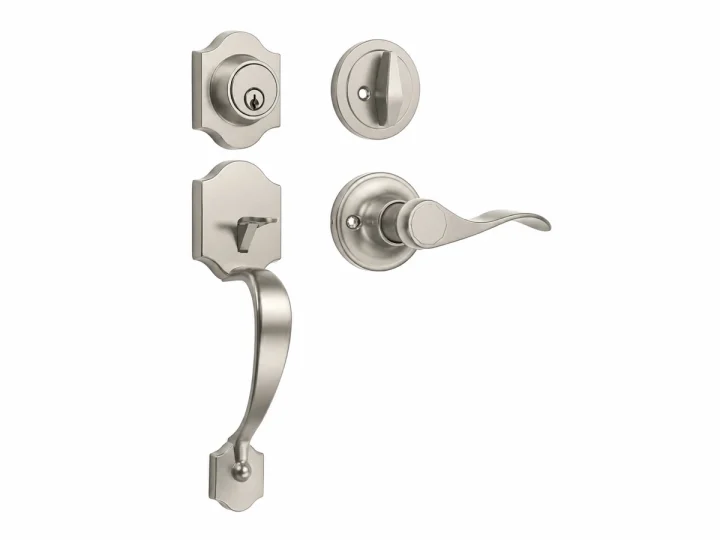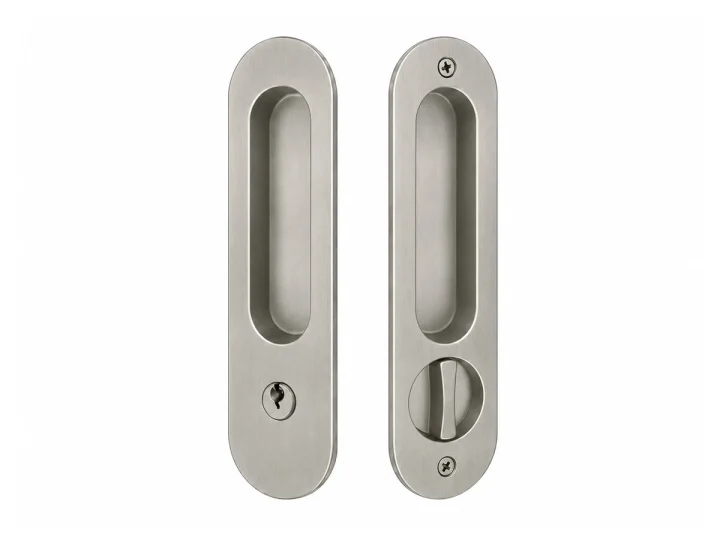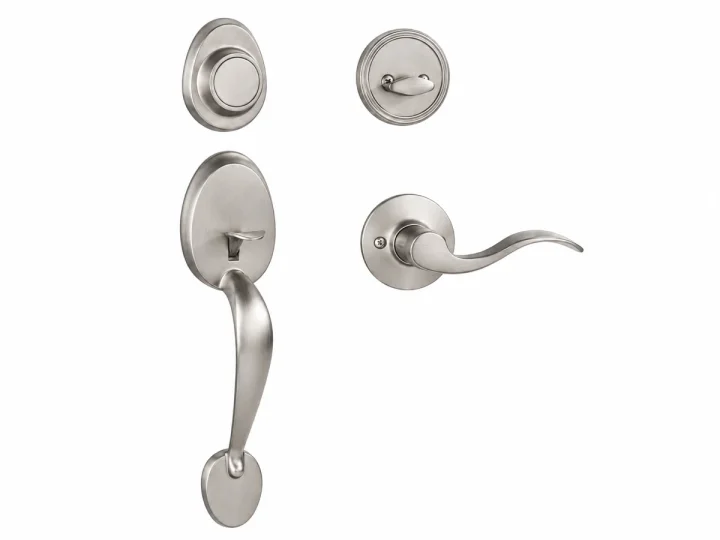
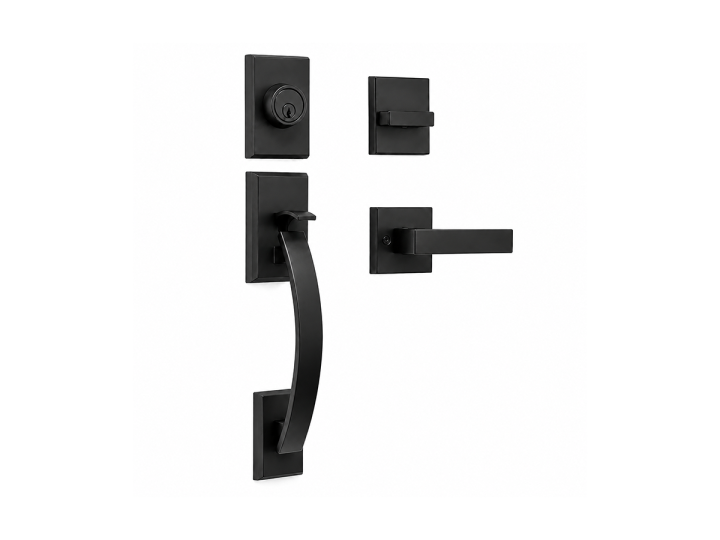
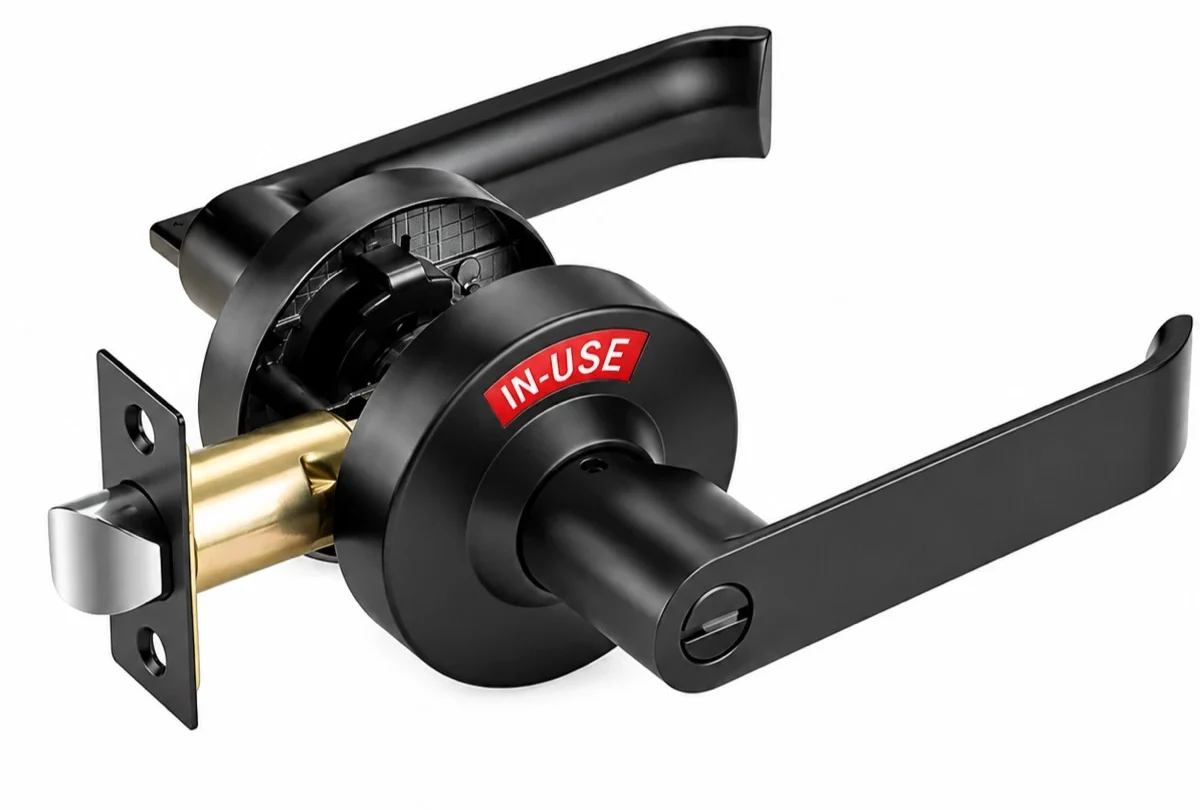
On a hotel restroom, a clinic exam room or a busy office washroom, a standard privacy lock is only half the job. The occupant needs to lock the door; everyone else needs to see that the room is in use before they try the handle. An occupancy-indicator lever lock does both with a purely mechanical window on the outside rose — typically reading vacant or occupied / IN-USE — so there is no battery, wiring or app to maintain. This guide is for hospitality buyers, contractors and distributors who need to specify or stock that function correctly.
How a mechanical occupancy indicator works
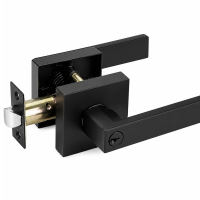
The indicator is not a separate electronic device. It is a window set into the outside rose of a privacy-function lever lock. When the user presses the inside button, the outside lever locks and a coloured insert rotates into the window. Unlock from the inside, and the window returns to vacant. An emergency release on the outside — usually a coin slot or a small tool hole — lets staff open the door if someone is locked in.
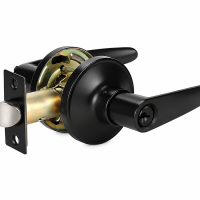
Because the display is driven by the lock mechanism itself, it keeps working through a power cut and does not need a network. Hotels and commercial washrooms still prefer a mechanical indicator for the restroom door, even when the rest of the building uses electronic access control on perimeter openings. Yanfeng manufactures mechanical door hardware only; the occupancy window on the YF807 heavy-duty lever lock is part of the rose, not a smart module.
Where this lock belongs on a door schedule
Specify an occupancy-indicator lock wherever people share a lockable room and should not have to test the handle to find out if it is free: hotel and resort public restrooms, spa changing rooms, office and clinic washrooms, meeting rooms that need a visual occupied signal, and shared bathrooms in student housing, senior living or co-working spaces.
It is not a substitute for a keyed entry lock on a storeroom, and it is usually more hardware than a private residential bedroom needs. For ordinary house and apartment bathrooms, a standard privacy lever is enough; our privacy lock buyer’s guide covers that case. For a full hotel package, start with specifying door hardware for a hotel project and our hotels and hospitality page.
Functions: pair the indicator with privacy
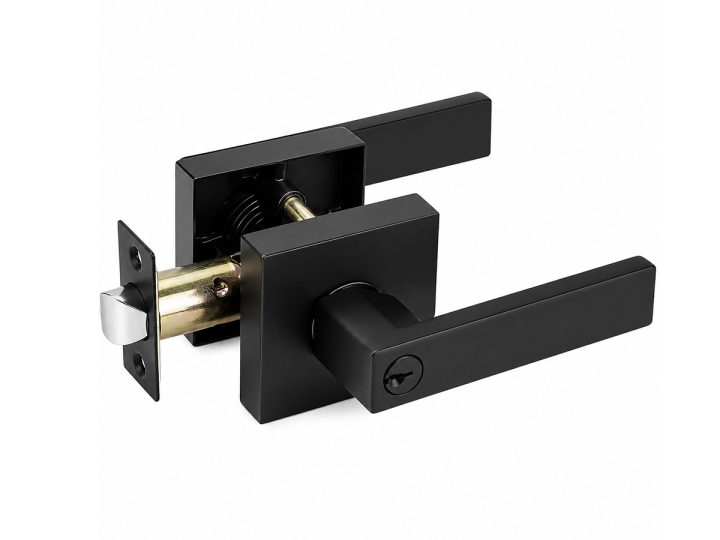
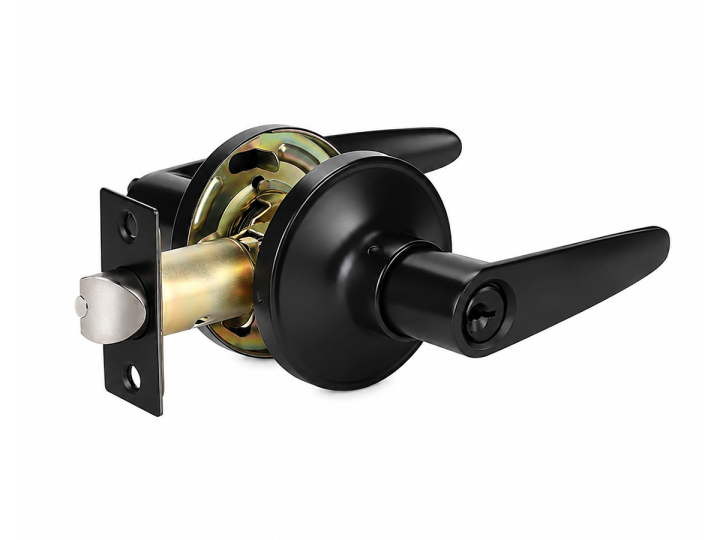
On Yanfeng’s heavy-duty lever locks, the occupancy window sits in the outside rose of the privacy configuration. The same chassis is offered in the four standard functions used across the range (see our guide to lock function codes):
| Code | Función | Typical use |
|---|---|---|
| BK | Privacy, with occupancy indicator and emergency release | Restrooms, changing rooms and meeting rooms |
| ET | Entrance: key outside, button inside | Offices and staff rooms on the same floor |
| PS | Passage: both sides always free | Corridors, closets and communicating doors |
| DL | Dummy: fixed lever, no latch | Inactive leaves and matching closet pulls |
Write the privacy (BK) function with the indicator on restroom and meeting-room doors. Entrance, passage and dummy complete a mixed floor so one lever design can run through public and back-of-house openings. All twenty heavy-duty designs share one chassis and one latch, so a project can mix lever shapes without mixing spare parts.
Specs buyers should lock on the RFQ
Copy these catalogue figures for YF807 onto the RFQ, then confirm any non-standard door thickness, backset or finish in writing before production:
| Parámetro | YF807 catalogue value |
|---|---|
| Material | Zinc alloy lever and rose on a heavy-duty chassis |
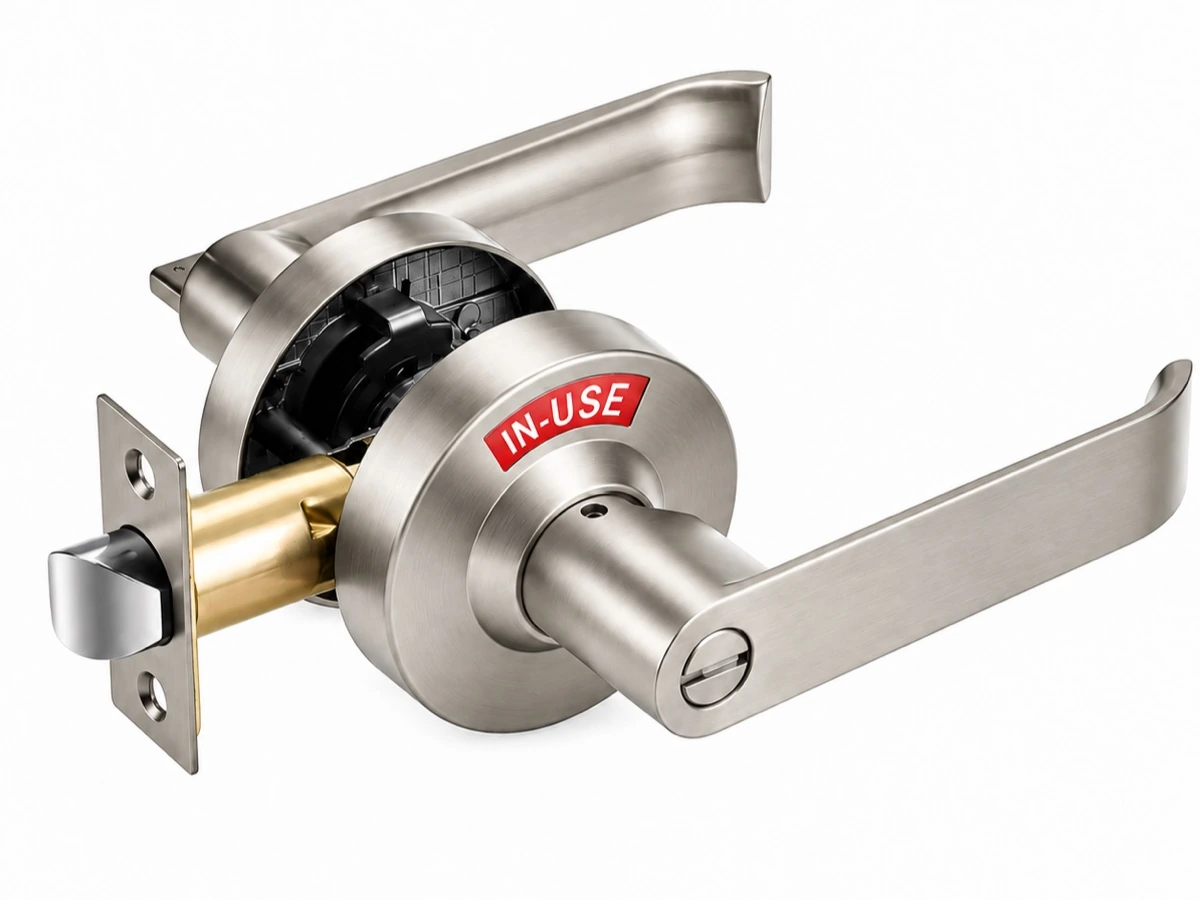
| Acabados estándar | Satin nickel (SN), matte black (MB), oil-rubbed bronze (ORB), satin chrome (SC), antique brass (AB) |
| Funciones | ET / BK / PS / DL |
| Espesor de puerta | 35–50 mm (covers thicker hotel and commercial doors) |
| Entrada | 60 / 70 mm (2-3/8" / 2-3/4") |
| Keyed keyways (ET function) | Kwikset, Weiser, Yale or Schlage |
| Embalaje | 20 or 24 sets per carton |
| Pedido mínimo | 500 pieces per model and finish |
| Plazo de entrega | 30–45 días tras la aprobación de la muestra |
The 35–50 mm thickness range is why a heavy-duty chassis belongs on hotel and office doors: many light-duty residential tubular locks will not clamp a 45–50 mm commercial leaf cleanly. The 60/70 mm backset matches standard North American and many export door preps. Hospitality specifications commonly call for ANSI/BHMA A156.2 Grade 2 performance on bored locks — the duty level this chassis is built to. Our article on ANSI/BHMA Grade 1, 2 and 3 explains what the grade covers; when a bid requires test reports, ask for them on the exact model and finish. See also our heavy-duty vs light-duty sourcing guide.
Finishes and matching the rest of the opening
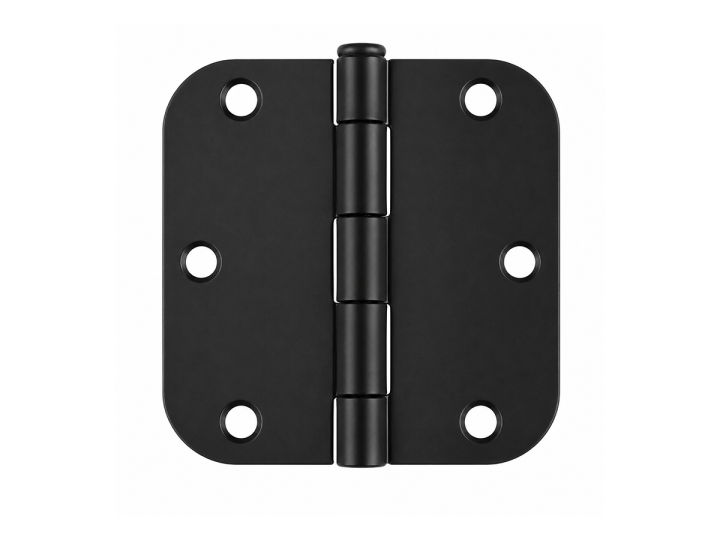
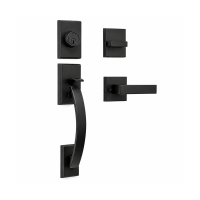
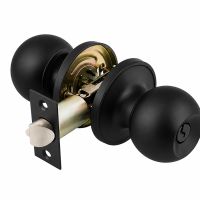
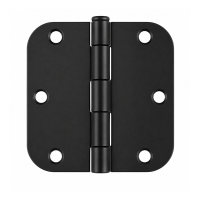
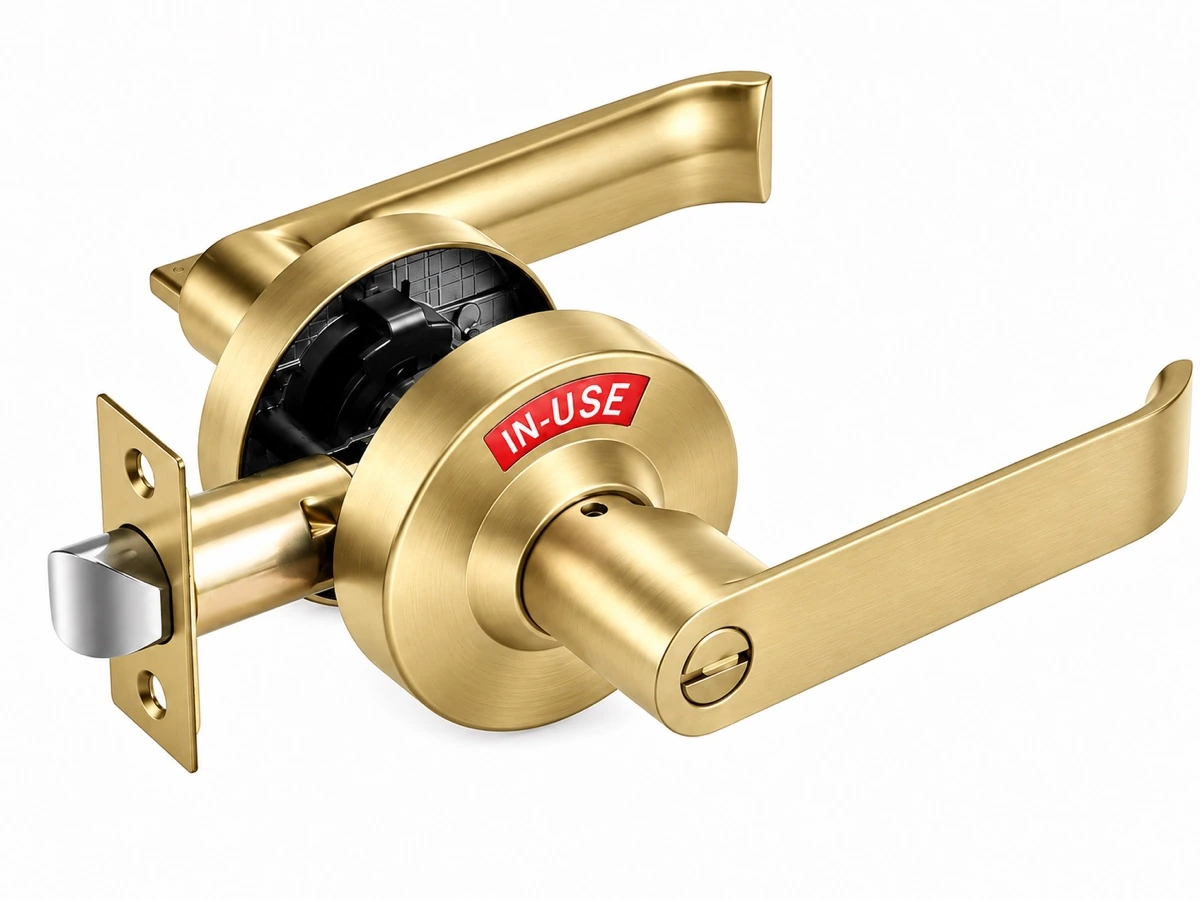
For a hotel or office washroom package, pick one finish and stay with it. The restroom indicator lock, corridor passage levers and nearby hinges should come from the same finish family. Our finish chart shows the codes side by side, and finish samples can ship with product samples. A practical stocking plan is two core finishes — usually matte black and satin nickel — plus one warm accent if the market still asks for bronze or brass. Every extra finish is another 500-piece MOQ. Other surface treatments, including a satin gold tone, can be quoted on request.
Ordering for a project or a stock program
The minimum order is 500 pieces per model and finish, with production lead time of 30 to 45 days after sample approval. Cartons hold 20 or 24 sets. For a hotel or multi-floor office, send the door schedule with function counts so the factory can pack by floor or building rather than as a mixed bulk lot.
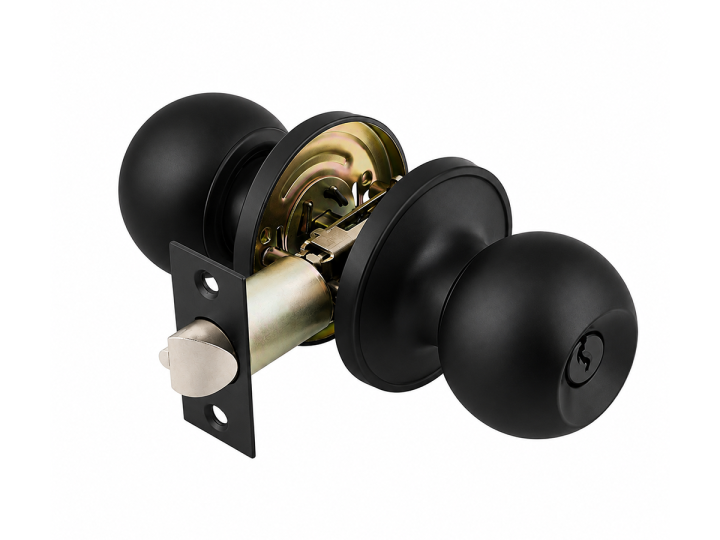
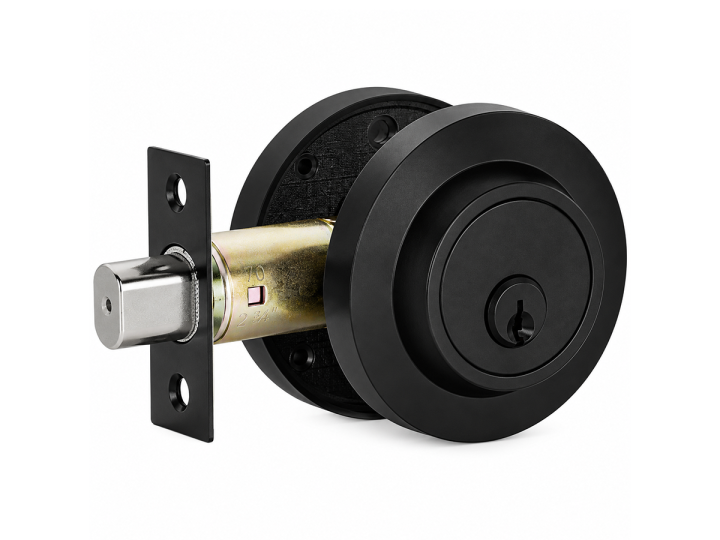
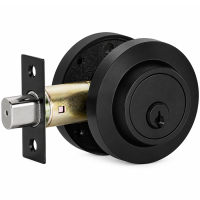
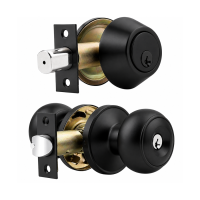
On guest-room entries, the usual partner above a round-rose lever is the YF106 deadbolt; for lighter interior doors, the YF610 interior lever shares a similar round rose. Distributors selling under their own brand can use our OEM and ODM service for packaging, barcodes, a logo on the rose and a private keyway. The ordering guide covers samples and inspection; the 2026 product catalogue lists the full heavy-duty range.
FAQ
Is an occupancy-indicator lock a smart or electronic lock?
No. The vacant/occupied window is a mechanical insert in the outside rose, driven by the inside privacy button. There is no battery, keypad or wiring to install or service.
Which function should I write on the door schedule?
Use privacy (BK) with the occupancy indicator for restrooms, changing rooms and meeting rooms. Use entrance (ET), passage (PS) or dummy (DL) in the same lever design for the other doors on that floor.
Will it fit a 1-3/4" (44 mm) commercial door?
Yes. The YF807 chassis covers 35–50 mm door thickness, including the 44 mm (1-3/4") leaves common on hotel and office projects, and a 60/70 mm adjustable backset.
Can I order a mixed container of indicator locks and other hardware?
Yes. Each model and finish must meet its own 500-piece MOQ, but indicator locks can ship in the same container as other levers, deadbolts, hinges and interior hardware.
Request samples or a project quote
Send us the room types, function counts, door thickness, backset and preferred finishes. An engineer will reply within one business day with a sample plan and a quotation.
- Email: [email protected]
- WhatsApp / Tel: +86 156 7475 6738
- US: +1 (971) 449-4495
You can also view the YF807 occupancy-indicator lever, browse the 2026 product catalogue, or use our contact page to request samples.