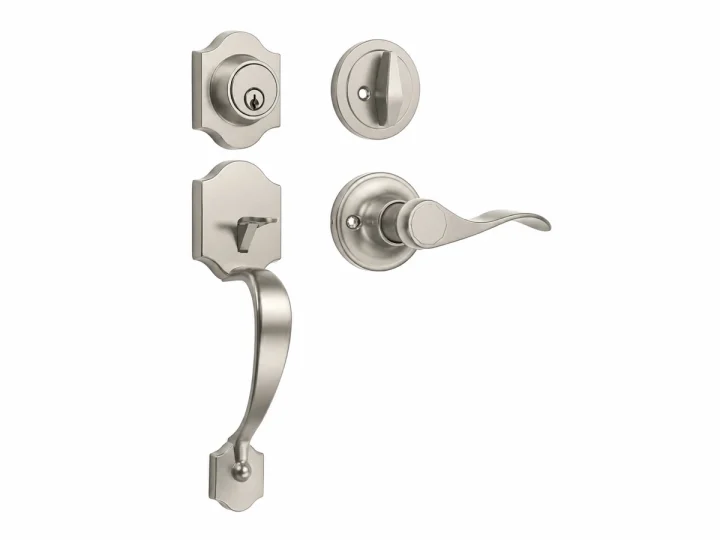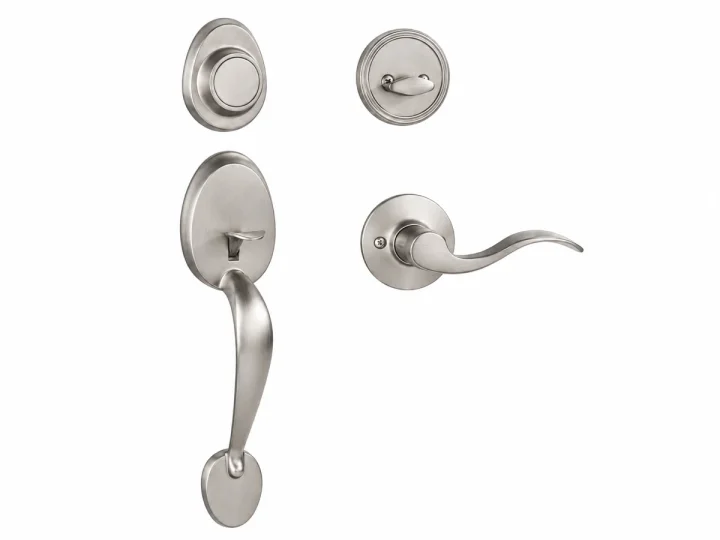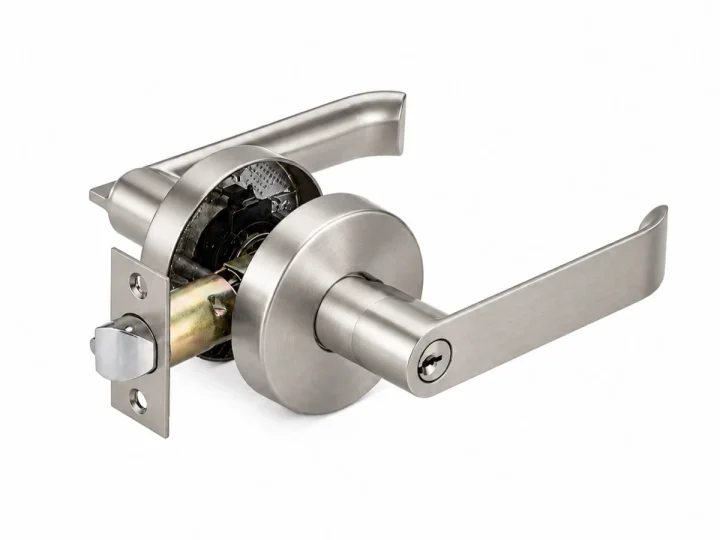
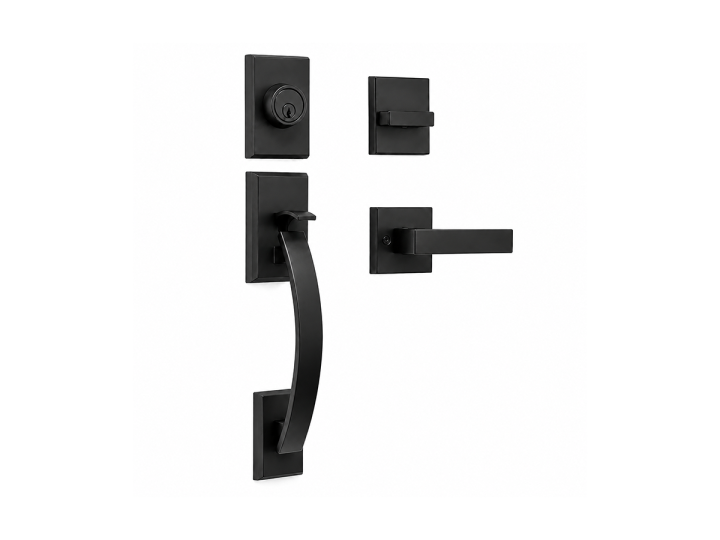
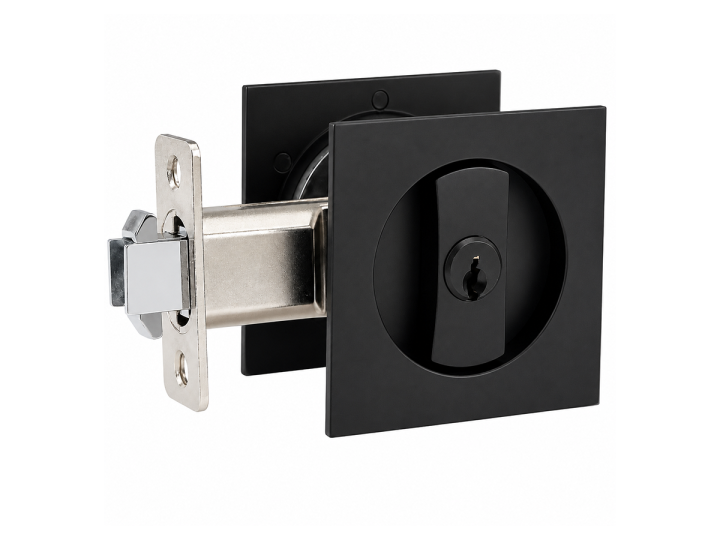
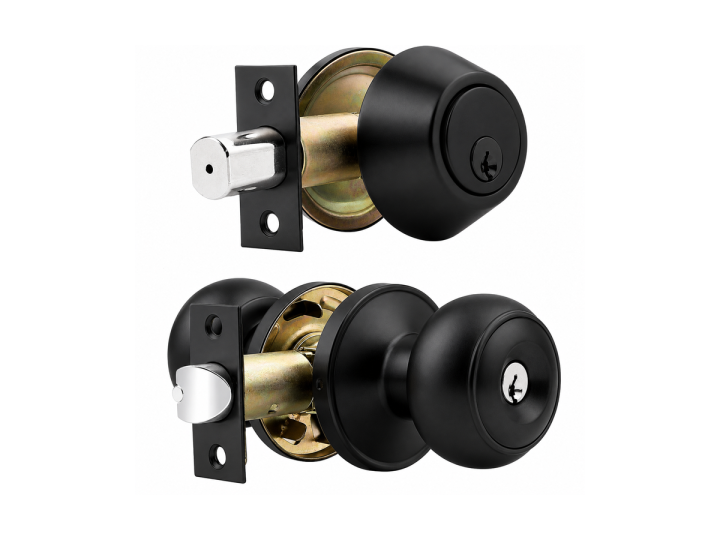
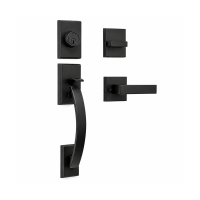
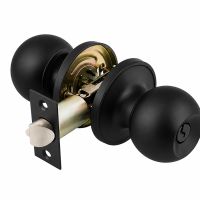
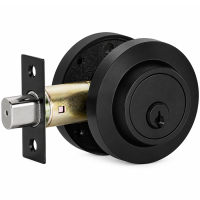
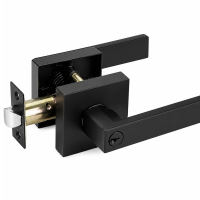
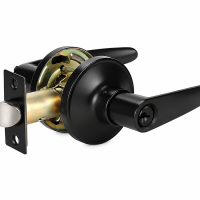
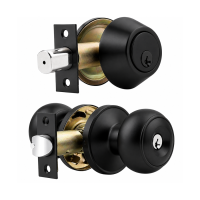
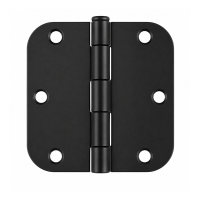
A hinged door can take a bored lever or knob. A pocket door cannot. As the slab slides into the wall, any projection on the face will hit the split jamb or the adjacent leaf. That is why buyers specify a recessed cup or a flush pull, with the lock sitting inside the door thickness. This guide is for importers, distributors, hospitality buyers and private-label brands who need to put the function, cut-out, door thickness and finish on the RFQ — not just a model number.
Why pocket-door hardware is specified differently
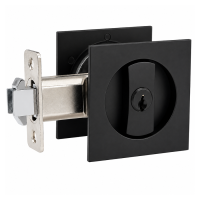
On a hinged opening the latch shoots into a strike on the jamb, and the rose can sit proud of the door. On a pocket or sliding door the hardware has to disappear with the slab: the body is let into the face so that nothing stands proud, and the latch is usually a hook or a sliding bolt rather than a sprung tubular latch made for a 2-1/8 inch cross bore.
Two measurements belong on every purchase order: door thickness, and the cut-out the door shop will machine. Yanfeng’s recessed locks fit sliding and pocket doors from 35 to 45 mm thick. Confirm the cut-out on the factory sample, then pass that drawing to the door supplier before the slabs are prepped — the most common reason a first container does not fit on site. Our earlier notes on pocket and sliding door hardware cover installation details that often get missed; this article is about sourcing the locks themselves. The five models in our sliding and pocket door lock collection share one mechanism, so shapes can be mixed in a single shipment.
Functions to write on the door schedule
A recessed body does not tell you whether the door locks. Write the function next to the model, using the same codes as the rest of the range — see our guide to lock function codes:
- ET — Entrance: key outside, turn-button or push-button inside. Use this on a sliding office door, a lockable guest-room partition, or a residential sliding door that needs a key.
- BK — Privacy: locked from inside, with an emergency release outside. This is the usual choice for pocket bathrooms and bedrooms. For hinged openings, see our privacy door lock guide.
- PS — Passage: no lock, both sides always free, for closets, pantries, laundry rooms and room dividers that only need a pull.
- DL — Dummy: a fixed pull with no latch, for inactive leaves and doors held on a floor guide or a separate catch.
Privacy and keyed versions share the same recessed body, so a bathroom and a closet on the same corridor can show the same shape and finish. Put the function count on the RFQ — for example 200 BK, 200 PS and 50 ET — rather than ordering a single SKU and deciding later.
Five shapes on one platform
The collection is zinc alloy, in the same five standard finishes as Yanfeng’s hinged ranges: satin nickel, matte black, oil-rubbed bronze, satin chrome and antique brass.
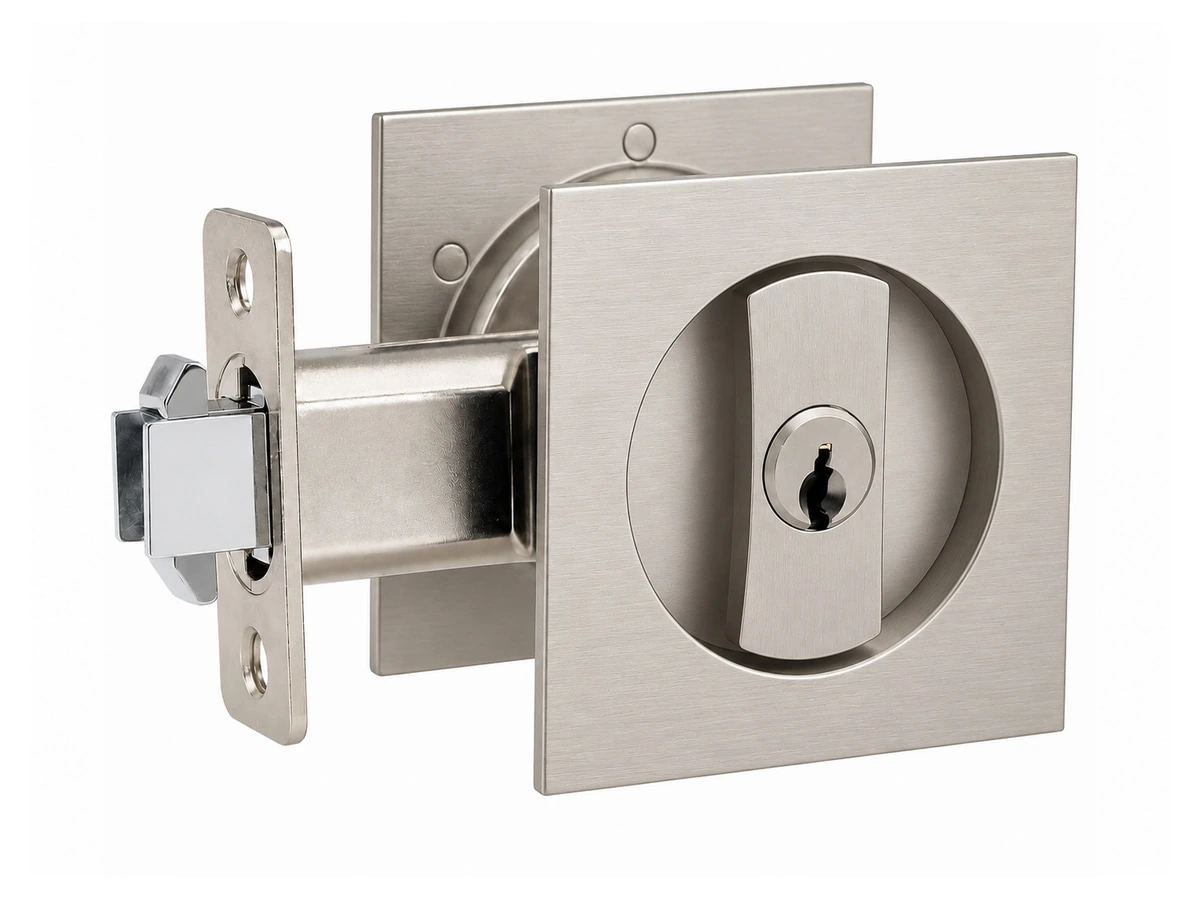
- YF201 — a square recessed cup with the key or privacy turn in the centre, a natural match for square-rose levers.
- YF202 — the same idea in a round cup, for corridors that already use round roses.
- YF203 — a long rectangular recessed pull with rounded ends and the turn or key below the finger recess, typically specified on sliding bathrooms and bedrooms.
- YF204 — a plain rectangular recessed pull. The catalogue photos show the passage version, without a turn, which most closet and pantry schedules call for.
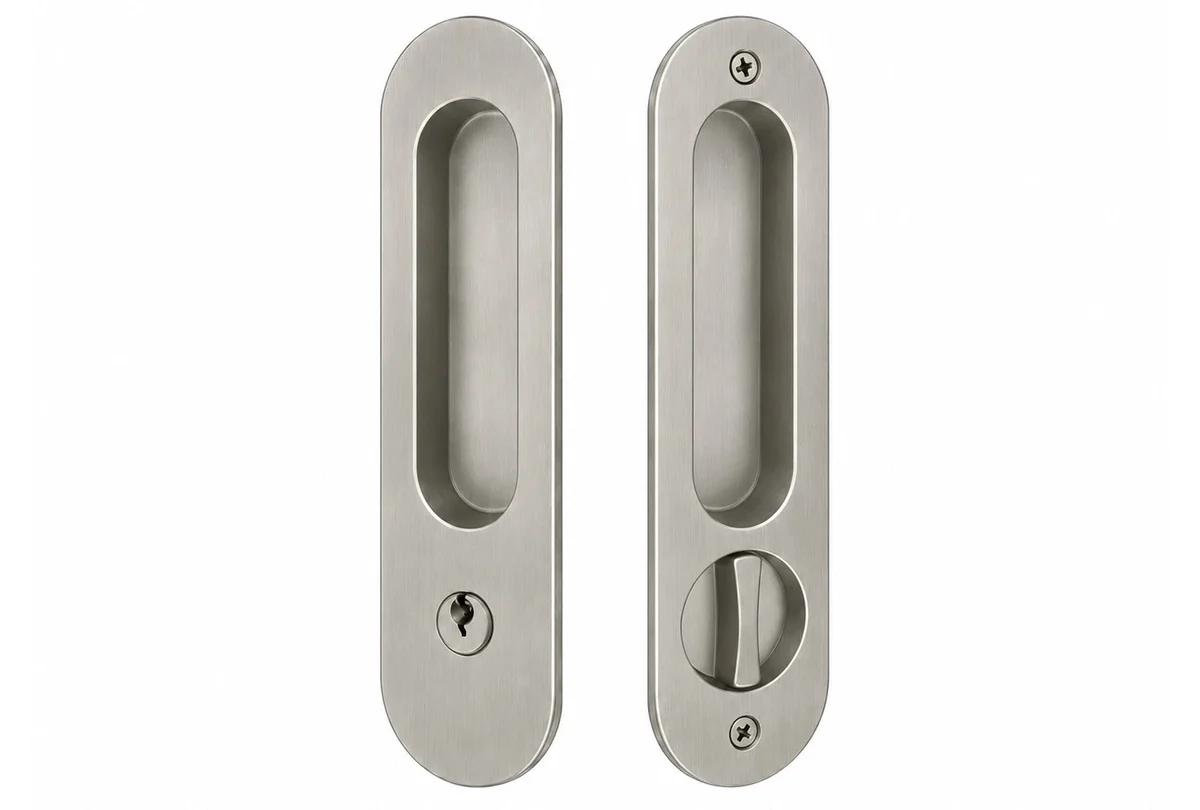
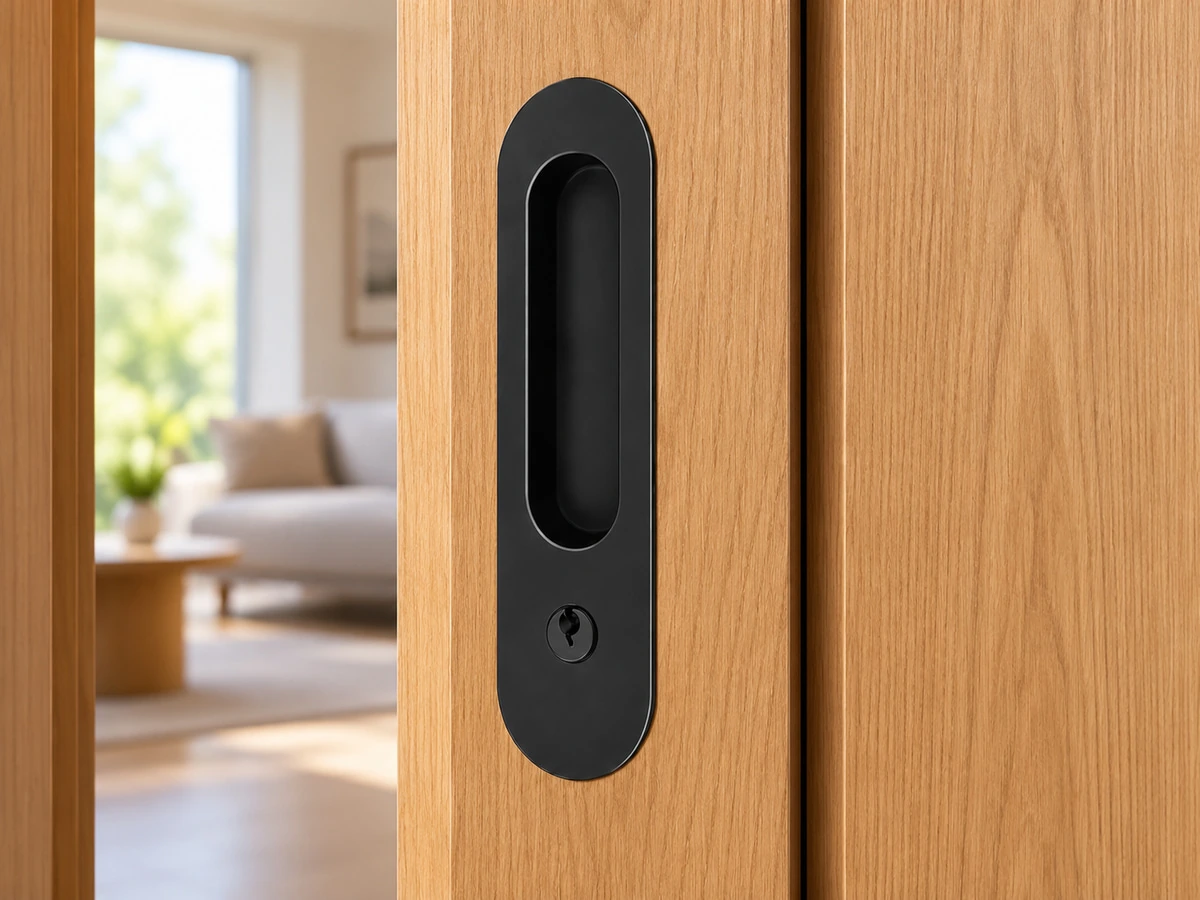
- YF205 — an obround (stadium-shaped) vertical pull with the turn or key at the lower end, supplied as a matching pair for both faces of the door.
Hinged doors on the same corridor can take a light-duty interior lever in the same finish. Our interior lever sourcing guide explains how to plan those quantities.
Door thickness, cut-out and what to check on the sample
Confirm three things on the first sample, in the door thickness the project will actually use. The body must sit flush; if it stands proud, it will mark the split jamb or catch as the door enters the pocket. The cut-out must match the drawing the door shop will use — makers do not share a single “standard” pocket-door prep. And the function must be the one on the schedule: an emergency release on privacy sets, a working key on entrance sets, and a free pull on passage sets.
YF205 comes as a matching pair, so both faces of the slab are covered in one set. For the other shapes, confirm that the pair and the latch are included as the packing list describes, and that the hook or bolt lines up with the strike on the jamb. If the slab is outside 35–45 mm, ask us before the door shop starts machining.
Specs, packing and MOQ
Copy these catalogue figures onto the RFQ, then add the model and function counts, the finish, and the door thickness and cut-out agreed with the door supplier:
| Parámetro | YF201–YF205 recessed pocket door locks |
|---|---|
| Cuerpo | Zinc alloy, recessed / flush |
| Shapes | Square cup (YF201), round cup (YF202), rectangular pull (YF203 / YF204), obround vertical pull (YF205) |
| Acabados estándar | SN, MB, ORB, SC, AB |
| Functions to specify | ET / BK / PS / DL |
| Espesor de puerta | 35–45 mm |
| Packing / MOQ / lead time | 40 sets per carton; 500 pcs per model and finish; 30–45 days after sample approval |
The finish chart shows satin nickel, matte black, oil-rubbed bronze, satin chrome and antique brass side by side. If the project is going into black, read our notes on matte black hardware first. Mechanical parts carry a five-year warranty and finishes a two-year warranty from shipment; a lifetime cylinder warranty is available on request for residential programmes. For packing notes and finish codes, see the ordering guide. Custom branding and packaging are available under our OEM and ODM programme. Current factory certificates and test standards are listed on the quality and certification page.
FAQ
Can a standard lever or knob be used on a pocket door?
Usually no. A lever or knob stands proud of the door and will hit the pocket frame. Specify a recessed lock or flush pull, and keep levers for the hinged doors on the same project.
How do I choose between privacy and entrance functions?
Use privacy (BK) on bathrooms and bedrooms that only need to lock from inside, with an emergency release outside. Use entrance (ET) when the door must also lock with a key from the corridor. Passage (PS) or dummy (DL) is enough for closets and room dividers that do not lock.
Can I mix shapes and finishes in one order?
You can mix shapes in one shipment, because the five models share one mechanism. The minimum order is 500 pieces per model and finish: 500 of YF201 and 500 of YF205 in satin nickel is two MOQ lines, and a second finish of the same model is a further line.
Request samples or a project quote
Send us the destination market, the door schedule with model and function counts (ET, BK, PS, DL), door thickness, cut-out (or a request for our drawing), and preferred finishes. An engineer will reply within one business day with a quotation.
- Email: [email protected]
- WhatsApp / Tel: +86 156 7475 6738
- US: +1 (971) 449-4495
You can also view the YF205 pocket door lock, the 2026 product catalogue, or our contact page.